
Short Answer
Franz Josef Land, a high‑Arctic archipelago in the Barents Sea, lies at the interface of the Atlantic and Arctic oceans. Its surrounding waters are among the most productive polar marine habitats, supporting a modest but ecologically significant assemblage of cetaceans. The three whale species regularly recorded here—the bowhead (Balaena mysticetus), beluga (Delphinapterus leucas), and narwhal (Monodon monoceros)—are keystone components of the Arctic food web and serve as indicators of sea‑ice health.
Species Overview
All three cetaceans belong to the order Cetacea and are uniquely adapted to the extreme conditions of the high north. Their large bodies, thick blubber layers, and specialized feeding mechanisms allow them to exploit the rich, seasonal productivity of ice‑associated ecosystems.
Bowhead Whale (Balaena mysticetus)
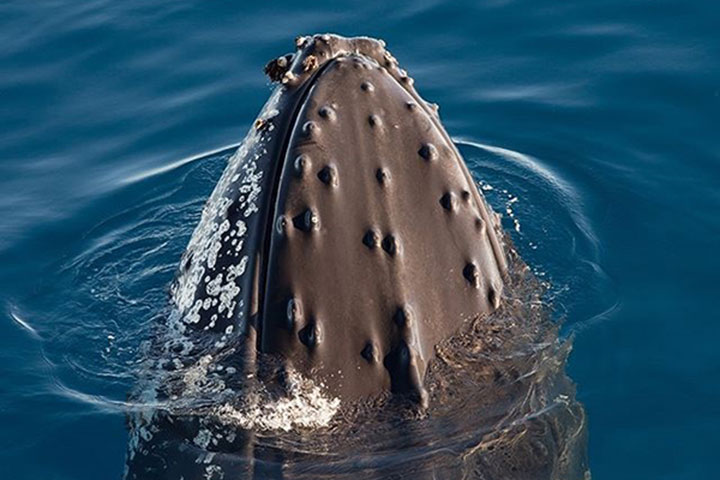
The bowhead is the largest Arctic baleen whale, reaching lengths of up to 20 m and weighing as much as 100 t. It possesses a massive, bow‑shaped skull that supports a fringe of baleen plates for filtering zooplankton.
Beluga Whale (Delphinapterus leucas)
Belugas are medium‑sized odontocetes, typically 4–5 m long, renowned for their white coloration and highly flexible necks. They are vocal and social, often forming large, noisy aggregations.
Narwhal (Monodon monoceros)
Narwhals are distinguished by the elongated, spiraled tusk of the males, an enlarged tooth that can grow beyond 2.5 m. They are deep divers, regularly reaching depths of 1 500 m in pursuit of squid and fish.
Distribution
These species have a circumpolar Arctic distribution, occupying the marginal seas of the North Atlantic and Arctic Ocean. In the Barents Sea, they concentrate around the ice edge and in polynyas that form near the western coast of Franz Josef Land during spring and autumn. Their migratory routes often bring them past the archipelago in spring (northward) and autumn (southward) as they follow the retreat and advance of sea ice.
Habitat in Franz Josef Land
Although the archipelago itself is ice‑bound for most of the year, the surrounding shelf waters provide several key habitats:
- Polynyas and leads: Open water areas within the pack ice that support dense aggregations of copepods and euphausiids, the primary prey for bowhead whales.
- Coastal shallows: Shallow bays such as Tikhaya Bay on Franz Josef Land’s western side are used by belugas for resting and socializing during ice‑free periods.
- Deep offshore troughs: The Barents Sea basin off the eastern islands provides the deep‑water habitat favored by narwhals during their seasonal feeding dives.
Observations of these whales have been recorded on and around the largest islands—Prince George Land, Wilczek Land, and Graham Bell Island—particularly during the brief summer melt (June–August) when sea‑ice retreats to the northern periphery of the archipelago.
Diet and Feeding
All three species are filter or suction feeders, exploiting the seasonal abundance of Arctic zooplankton and nekton:
- Bowhead: Primarily filter‑feeds on copepods, krill, and other small crustaceans using its baleen.
- Beluga: Uses echolocation to locate fish (e.g., Arctic cod) and benthic invertebrates; also consumes squid and crustaceans.
- Narwhal: Specializes in deep‑water squid and fish, employing its large, flexible heads to create suction.
Breeding and Life Cycle
Breeding cycles are tightly linked to sea‑ice dynamics:
- Bowhead: Females give birth to a single calf every 3–4 years, typically in the winter when ice provides protection. Calving grounds are thought to be in the offshore ice‑covered waters north of Franz Josef Land.
- Beluga: Calving occurs in summer (June–July) in shallow, ice‑free coastal areas; calves stay with the mother for up to two years.
- Narwhal: Females give birth to a single calf in the spring, often in polynyas that persist through the early melt season.
Relationship to Sea Ice
Sea ice is a critical habitat component for all three species. Bowhead whales use the ice edge as a foraging frontier, while belugas rely on open water within the ice for breathing and socializing. Narwhals, the most ice‑dependent, spend the majority of the year beneath thick pack ice, surfacing through leads to breathe. Consequently, interannual variability in ice cover—driven by climate change—directly influences distribution, feeding success, and reproductive timing.
Conservation Status
According to the International Union for Conservation of Nature (IUCN):
- Bowhead whale – Least Concern globally, but several subpopulations are classified as Near Threatened due to historic whaling pressure.
- Beluga whale – Least Concern globally, yet Arctic stocks face threats from habitat loss and noise pollution.
- Narwhal – Least Concern globally, with population trends considered stable but vulnerable to rapid ice loss.
Within Russian jurisdiction, all three species benefit from the protection afforded by the Russian Arctic National Park (established 2012) and the 1994 nature sanctuary designation of Franz Josef Land.
Research and Monitoring
Systematic cetacean surveys have been conducted since the Soviet era, beginning with aerial counts from military airfields in the 1970s. Modern research combines satellite telemetry, passive acoustic monitoring, and drone‑based photogrammetry. Russian institutions (e.g., the Arctic and Antarctic Research Institute) and international partners (e.g., the Norwegian Polar Institute) coordinate annual summer expeditions that record sighting frequencies, behavioural observations, and genetic samples.
Identification
| Feature | Bowhead | Beluga | Narwhal |
|---|---|---|---|
| Size (max length) | ≈20 m | ≈5 m | ≈5.5 m |
| Color | Dark gray to brown | White (adults) | Dark gray, males develop a white tusk |
| Distinctive trait | Massive, bow‑shaped skull with baleen | Flexible neck, vocal “canary” calls | Spiral tusk (males) |
| Primary diet | Zooplankton (copepods, krill) | Fish, squid, crustaceans | Squid, deep‑water fish |
| Ice dependence | High (ice edge foraging) | Moderate (summer coastal use) | Very high (year‑round under pack ice) |
FAQ
Which whale species are regularly seen around Franz Josef Land?
The bowhead, beluga, and narwhal whales are the three cetaceans most frequently recorded in the waters surrounding the archipelago.
How does sea‑ice loss affect these whales?
Reduced ice cover can diminish the foraging habitat of bowheads at the ice edge, limit belugas’ safe breathing openings, and force narwhals to alter deep‑water feeding patterns, potentially impacting reproductive success.
Are there any protected areas for whales in Franz Josef Land?
Yes. Franz Josef Land is part of the Russian Arctic National Park, established in 2012, and has been a nature sanctuary since 1994, providing legal protection for its marine mammals.
Leave a Reply