
Short Answer
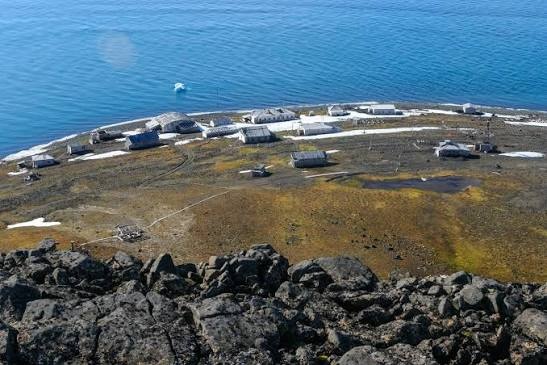
Tikhaya Bay Station (Russian: полярная станция «Бухта Тихая») was the principal Soviet scientific installation on the western coast of Guker Island, part of the Franz Josef Land archipelago. Founded on 30 August 1929 during the O.Y. Schmidt expedition aboard the ice‑breaker Georgiy Sedov, the station became a cornerstone of Arctic research in the high north, hosting regular meteorological, magnetic, glaciological and biological observations for three decades.
Located on the sheltered inlet of Tikhaya Bay (80°19′ N, 52°48′ E), the base functioned as the administrative, logistical and scientific centre of the entire Zemlya Frantsa‑Iosifa region. In 1953 it received the formal status of an Arctic Scientific‑Research Observatory (АНИО), and the last wintering party left in February 1960. The site now serves as a seasonal field camp for the Russian Arctic National Park and a point of interest for polar tourists.
Location
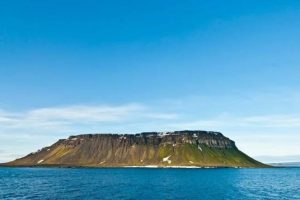
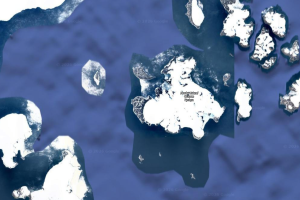
The station sits on the south‑western shore of Guker Island (Остров Гукера), at the head of the eponymous Tikhaya Bay, which opens onto the Mellenius Strait separating Guker from Scott‑Keltie Island. The precise coordinates are 80°19′ N, 52°48′ E. Administratively the island belongs to Arkhangelsk Oblast and, since 2009, to the Russian Arctic National Park (Национальный парк «Русская Арктика»).
Name Origin
The bay received its name from the early 20th‑century Russian expedition of Georgy Y. Sedov, who christened the previously unnamed inlet «Бухта Тихая» (“Calm Bay”) during the 1913–1914 wintering in the area. The name was later adopted for the polar station that was erected on its shore in 1929.
Discovery and Expedition History
The first recorded landing in the bay occurred in April 1913 when Sedov’s schooner Sv. Muchenik Foka entered the inlet to establish a temporary winter camp. The party, led by Sedov and including geographer V.Y. Vize, geologist M.A. Pavlov and artist N.V. Pinegin, conducted systematic meteorological, magnetic and glaciological observations from September 1913 until July 1914, when the vessel departed on 30 July 1914.1 A wooden cross erected by the expedition still marks the site of their astronomical point.
After the First World War and the Russian Civil War, the Soviet Union annexed Franz Josef Land in 1926. The O.Y. Schmidt ice‑breaker expedition of 1929, sailing on the Georgiy Sedov, selected the historic wintering site as the location for a permanent research station. The station officially opened on 30 August 1929, with a modest complex of a meteorological hut, magnetic observatory, and a snow‑built storage depot.
Throughout the 1930s and 1940s the station was resupplied mainly by ice‑breakers from Murmansk. In 1953 the Soviet Academy of Sciences elevated the outpost to the status of an Arctic Scientific‑Research Observatory (АНИО). Scientific programmes expanded to include aerology, actinometry, hydrography, glaciology, and early cosmic‑ray studies. The base supported wintering crews of up to 12 personnel, who endured the polar night while maintaining continuous observations.
By the late 1950s, logistical difficulties and the emergence of a more centrally located observatory on Hayes Island (Остров Хейса) prompted a gradual drawdown. The final wintering party left the station in February 1960, and the last ship cleared the bay at the end of the 1960 navigation season.
Structures and Remains
| Structure | Year Built | Description | Current Condition |
|---|---|---|---|
| Meteorological Hut | 1929 | Wood‑frame building with insulated walls, housing barometers, thermometers, and radiosonde launch platform. | Partially collapsed; roof removed, foundations visible. |
| Magnetic Observatory | 1930 | Snow‑brick enclosure for magnetometers and a small laboratory. | Walls remain, interior filled with ice and debris. |
| Storage Depot | 1929 | Double‑wall timber store for fuel, food and scientific equipment. | Roof collapsed, timber rotted, but metal fittings survive. |
| Wooden Cross & Astronomical Point | 1913 | Cross erected by Sedov’s party; nearby cairn marking latitude/longitude. | Cross still stands, weathered; cairn intact. |
| Grave of I.A. Zander | 1914 | Gravestone of the expedition mechanic who died of scurvy. | Stone marker remains, covered by snow in winter. |
Historical Maps
The inlet first appeared on British charts after the 1895 expedition of Frederick J. Jackson, labelled simply as an unnamed bay on the western coast of Guker Island. Russian cartographers of the early 20th century, notably the 1914 Russian Hydrographic Office map, annotated the feature as «Бухта Тихая» following Sedov’s naming.1 Soviet topographic series of the 1930s (Scale 1:200 000) depicted the station complex with the abbreviation «БТ» (Bukhata Tikhaya). After the station’s closure, modern Russian Arctic National Park maps retain the historic name for the bay while indicating the site as a “seasonal field camp”.
Present Condition
Today the remnants of Tikhaya Bay Station are protected as a cultural‑heritage object within the Russian Arctic National Park. The site is visited in summer by park rangers and occasional scientific parties conducting brief field campaigns. The wooden structures are monitored for decay, and the historic cross and grave are maintained as memorials to the early Russian polar explorers.
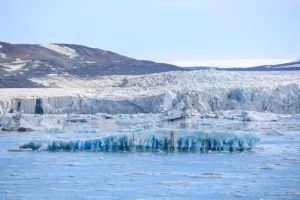
Since 2012 the bay has become a modest stop for polar‑tourism vessels operating under strict environmental guidelines. Visitors can view the ruins, the cross, and the surrounding glaciated landscape, which remains largely unchanged due to the island’s high‑latitude climate.
FAQ
When was Tikhaya Bay Station founded and by whom?
The station was founded on 30 August 1929 by the Soviet ice‑breaker expedition led by O.Y. Schmidt aboard the Georgiy Sedov.
What scientific disciplines were studied at the station?
Meteorology, magnetic observations, aerology, actinometry, hydrography, glaciology, and early cosmic‑ray research were conducted continuously from 1929 to 1960.
Why was the station closed in 1960?
Logistical challenges and the establishment of a more centrally located observatory on Hayes Island made Tikhaya Bay less essential, leading to the withdrawal of the final wintering crew in February 1960.
Are any original structures still visible today?
Remnants of the meteorological hut, magnetic observatory, storage depot, a wooden cross, and the grave of mechanic I.A. Zander remain, though most are roofless or partially collapsed.
Can visitors access the site?
Yes, the site is part of the Russian Arctic National Park and can be visited in summer under strict environmental regulations, primarily as a stop for park rangers and polar‑tourism vessels.



Leave a Reply